Good to know
What is included in an emergency roof leak repair?
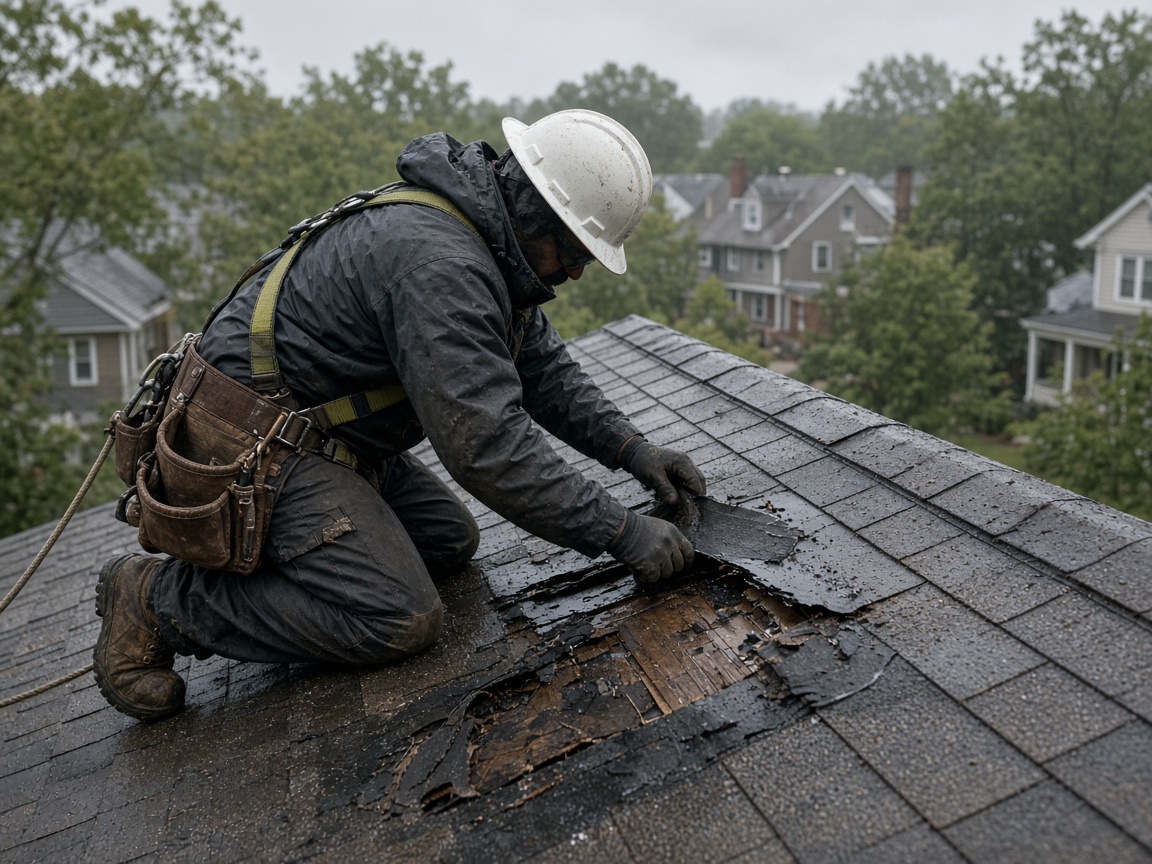
An emergency roof leak repair is a stabilization visit followed by a targeted fix. The first goal is to stop water from entering the home, not to redo the whole roof in one visit. Local providers usually begin by securing a tarp over the compromised section, clearing debris from the affected area, and recording where water is coming through so the permanent repair is planned against the actual failure.
The scope of the visit normally covers more than the single spot that dripped. Roofers check flashing, pipe boots, vents, valleys, skylights and ridge areas, which local roofing sources list as the most common leak points. They also check the attic for wet decking, damp insulation and daylight coming through the roof boards, because those signs show the path the water took before it reached the ceiling.
What is included depends on the findings. If the damage is limited to a few shingles or one flashing detail, the repair may be contained within a single visit. If decking or underlayment is soaked, the local providers you are matched with can explain what must be replaced before the roof is watertight again. Ask for the scope in writing so you know which work stabilized the roof and which permanent work still remains.
Which sub-services fall under emergency roof leak repair?
Emergency work usually breaks down into several sub-services. Shingle replacement addresses wind-lifted, cracked or missing shingles on asphalt systems, including architectural shingle systems that are common across Round Rock. Flashing repair targets the metal pieces around chimneys, walls and roof-to-wall joints. Pipe boot replacement covers the rubber collars around plumbing vents, which are a frequent entry point as the rubber ages and splits.
Other sub-services include valley repair, where two roof planes meet and water concentrates during heavy rain; skylight resealing or replacement; vent and ridge vent repair; and underlayment or decking repair when moisture has reached the structure. Drip edge is also part of the discussion because the City of Round Rock requires drip edge installation under IRC Section R905.2.8.5, and missing or damaged drip edge can let water run behind the fascia and into the roof edge.
Not every leak needs every sub-service. A provider should match the fix to the failure you find. Some homeowners want a full roof replacement right away, but that is a separate project from emergency stabilization. Keeping the two apart means the urgent work is not delayed while a larger replacement is planned, and it gives you a clearer picture of what the permanent repair actually needs.
How do you find where a roof is leaking?
The stain on your ceiling is rarely directly under the entry point. Water travels along the roof decking and framing before it shows indoors, sometimes running several feet sideways or downhill from where it got in. The most reliable method is to trace the path in reverse: start at the interior stain, move up through the attic to the wet path, then follow that path uphill to the entry point. Flashing, penetrations, valleys and skylights are usually checked first because they are the most frequent sources.
Inspecting during rain can make the source easier to confirm. Watching the attic while water is still falling shows whether the drip is active, where it lands and which framing members carry it. Cracked sealant around skylights, chimneys and valleys tends to worsen over time, so a leak that appears only in heavy storms often points to a detail that has aged rather than a sudden failure of the shingle field.
Home age also matters. Round Rock's ACS 2020-2024 figures list 51,143 housing units with a median year structure built of 2002. Build eras vary by neighborhood: Cat Hollow homes were mostly built between 1991 and 2001, Brushy Creek homes between 1978 and 2005, and Forest Creek mostly between 1995 and 2005. Teravista homes date from the 2000s and early 2010s, Behrens Ranch is a 2000s-to-early-2010s community, and Paloma Lake was mostly developed in the 2010s. A roof in an older build era may have more sealant and flashing that has reached the end of its service life, so checking those details first is a sensible starting point.
Is it safe to get on the roof during a storm?
No. A wet, damaged roof is slippery, shingles can lift or tear loose underfoot, and water can hide soft decking that gives way under weight. Lightning and strong wind add further risk while a storm is active. The safer approach is to stay inside, protect the belongings under the leak, and wait until conditions allow a qualified provider to access the roof.
Useful steps inside the home are simple. Move furniture and electronics away from the drip, place buckets or containers on a protective towel, and lay down plastic sheeting where water is pooling. Do not puncture a bulging ceiling to drain it, because that can send water into wiring and fixtures. Note the time the water started, the location of the drip and any sound of dripping in the attic, and take photos from inside the room and from the attic hatch.
Once the storm passes, the local providers you are matched with can climb the roof with the right equipment and secure the compromised section. Waiting for that visit is safer than trying to stop the leak yourself from a ladder or the roof surface.
When is a roof leak an emergency rather than a routine repair?
A leak becomes an emergency when water is actively entering the home during rain, the ceiling is bulging or sagging, water is reaching light fixtures or outlets, or a large area of insulation is soaking. Storm-driven leaks deserve the same urgency because wind can push water under shingles and into areas that normally stay dry. A small, slow stain that stays dry between storms is usually a routine repair that can be planned for a convenient date.
Storm exposure in this area is significant. The City of Round Rock states that peak severe thunderstorm and tornado season usually lasts from March to June. NOAA records summarized for Round Rock report 61 hail days within 15 miles of the city center since 2010, with April having the most hail days and the largest hail reaching 4.0 inches in 2023. NOAA-recorded hail of 1 inch or larger occurred near Round Rock on 9 days from 2016 to 2025. These figures explain why a leak after a hailstorm should be treated as a potential emergency, even when the shingles look intact from the street.
The March 21, 2022 Round Rock/Granger tornado reached EF2 strength after touching down southwest of the I-35 and TX 45 interchange, and it tore roofs off several residences in the Windy Terrace and Greenlawn Place neighborhoods. Severe weather of that kind can leave damage that only shows up as a leak days later, so any new drip after a storm deserves a prompt inspection.
Is a tarp enough to protect a roof until the permanent repair?
A secured tarp is a temporary measure. It stops active water entry over the compromised section and buys time until a dry window allows the permanent repair. It does not replace damaged flashing, decking or shingles, and it should not be treated as the end of the job. Providers typically fasten the tarp so wind cannot lift it, extend it beyond the visibly damaged area, and weight or batten its edges so it does not shift in the next storm.
Tarps need checking. After each new storm, the tarp should be inspected for tears, loose fasteners and water pooling in its folds. Because storm season in this area usually runs from March to June, a tarp installed in spring may need repeat attention before the permanent work is scheduled. Ask the provider when the tarp will be rechecked and who is responsible for that visit.
A tarp also does not stop damage inside the home. Wet insulation and ceiling materials keep affecting the structure until they are dried or replaced. Once the permanent repair is complete, the attic should be checked again for dryness and staining.
Still have questions? We're happy to talk it through.